Germany PR for Indian Nurses: Permanent Residency Timeline, Requirements, and How to Qualify (2026)
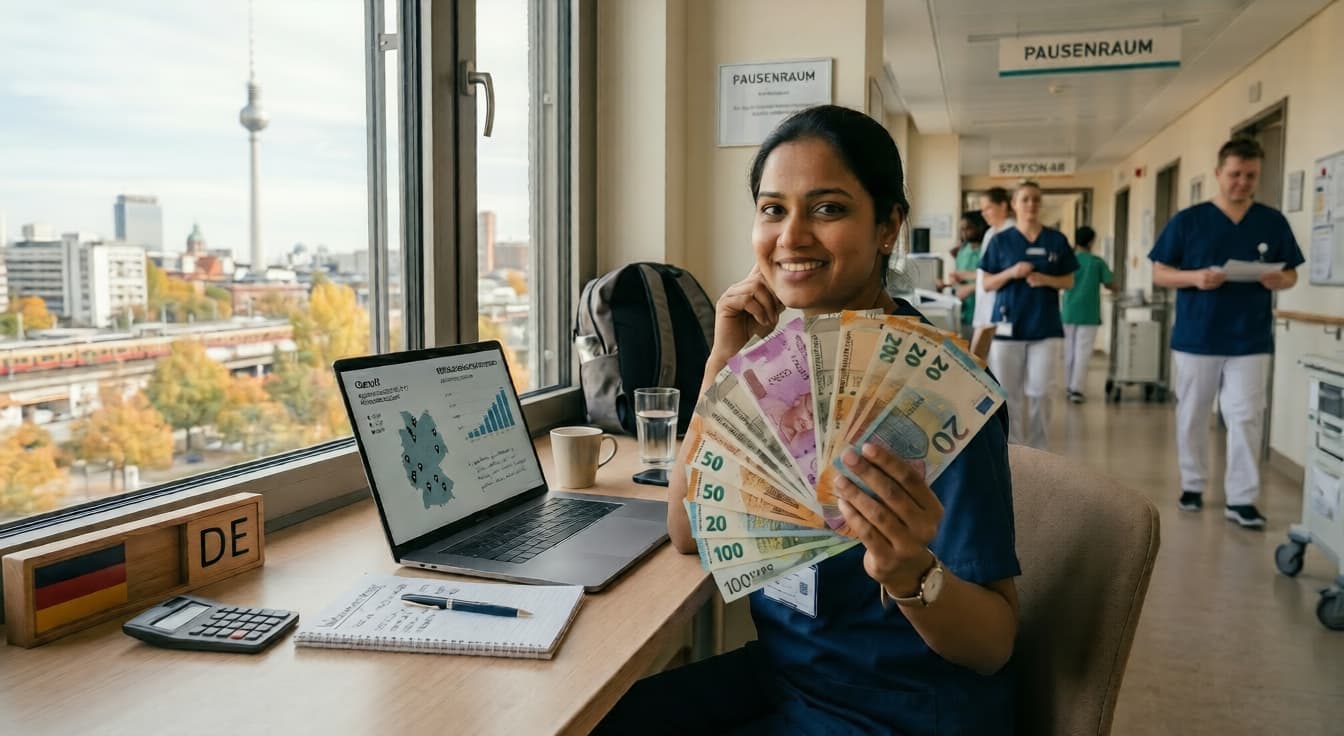
Fast Facts: Life in Germany
5 Years
To German Citizenship
30 Days
Paid Annual Leave
"You qualified as a nurse, put in the hours, and now you are thinking beyond the next contract. Germany is one of the few countries where skilled nurses can build a permanent life, not just a temporary work stint. The pathway to Permanent Residency is real, it is achievable, and this guide explains exactly what it takes.
Quick Answer
Germany has over 300,000 unfilled nursing positions and is actively recruiting internationally to close that gap. For Indian nurses who secure recognition and a hospital contract, the country does not just offer a job — it offers a structured, legally defined path to permanent status. Understanding how that path works from day one helps you plan your career rather than discover the rules mid-journey.
What Are the Actual Requirements for a German Settlement Permit?
The settlement permit (Niederlassungserlaubnis) is the formal document that gives you the right to live and work in Germany permanently, independent of any employer. It is not automatic — you apply for it once you meet the criteria, and the decision is made by the immigration authority (Ausländerbehörde) in your city.
The standard requirements are:
Residence duration. You must have held a valid German residence permit and lived legally in Germany for at least 5 years. Under the 2023 Skilled Immigration Act reform, nurses employed in a recognised skilled occupation can apply after 3 years if they meet the income threshold (currently 60% of the annual pension contribution ceiling, roughly €40,000 gross per year).
Continuous nursing employment. Your residence and employment must have been uninterrupted. Career breaks, long sick leave, or a gap between jobs can affect your eligibility timeline.
Pension contributions. You must have made at least 60 monthly contributions to the German pension system (5 years), or at least 36 months (3 years) under the accelerated pathway.
B1 German language proficiency. You need to demonstrate B1 level, which is a step below the B2 required for nursing registration. If you entered Germany with B2, you already exceed this requirement.
Financial self-sufficiency. You must be able to support yourself without relying on social welfare benefits.
Basic civic knowledge. You need to pass a short test on German law, society, and values (covered by the standard integration course most nurses complete early in their time in Germany).
| Pathway | Minimum Residence | Income Threshold | Language Requirement |
|---|---|---|---|
| Standard settlement permit | 5 years | Standard employment | B1 |
| Accelerated (skilled worker, 2023 reform) | 3 years | ~€40,000 gross/year | B1 |
| EU Blue Card holders | 21 to 33 months | €45,934+ gross/year | B1 or A1 |
Note on the EU Blue Card: nurses can qualify if their gross salary reaches €45,934 per year (the shortage occupation threshold). Senior nurses in cities like Munich or Frankfurt who work with regular shift allowances can reach this level, but it is not guaranteed at entry level. Ask your employer about your salary band before assuming Blue Card eligibility.
What the Timeline Actually Looks Like for an Indian Nurse
A realistic timeline for an Indian nurse arriving through the standard recognition pathway looks like this:
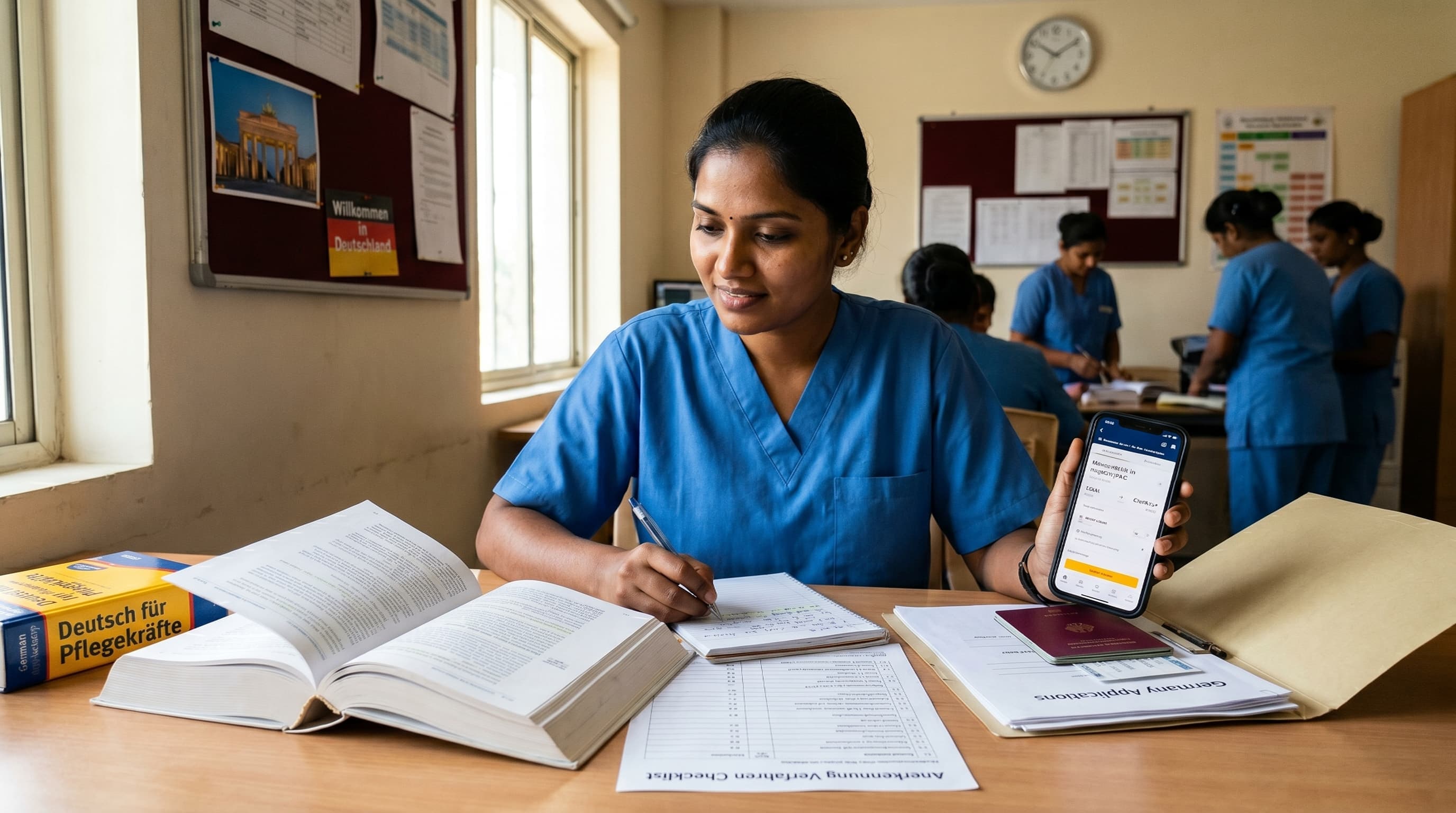
Months 1 to 18 (pre-arrival). German language study from A1 to B2 in India, document preparation, Anerkennung application, and hospital matching. For a complete breakdown of this phase, read our guide to getting a nursing job in Germany from India.
Months 18 to 24 (Anpassungslehrgang). Bridging course in a German hospital if you received partial recognition. Paid placement at €1,400 to €1,800 per month. Full nursing licence issued on completion.
Years 2 to 5 (employed as a registered nurse). Working under your full nursing licence at €2,800 to €3,800 gross per month (€1,700 to €1,900 net). Accumulating pension contributions and building your residency record.
Year 3 (earliest PR application under accelerated pathway). If your gross salary reaches the income threshold and you meet all other criteria, you can apply for the settlement permit.
Year 5 (standard PR application). If you do not meet the accelerated threshold, you apply under the standard 5-year route.
Years 8 to 10 (citizenship eligibility). After holding permanent residency, you can apply for German citizenship. Germany permits dual nationality in most circumstances since the 2024 reform.
What Changes When You Have Permanent Residency
Before you have the settlement permit, your right to remain in Germany is tied to your employment contract. If you change hospitals, take a career break, or face any gap in your visa renewal, your status becomes uncertain.
After the settlement permit, your residence right is independent. You can:
- ✦Change employers without notifying the immigration authority
- ✦Take a career break or study without losing your status
- ✦Sponsor family members for residency more easily
- ✦Access the full German social system without restrictions
- ✦Start building toward citizenship
For a detailed look at what working life as an Indian nurse in Germany involves across the full career arc, read is nursing in Germany worth it for Indian nurses in 2026.
Salary and Savings During the PR Journey
Understanding your financial position across the 3 to 5 year period helps you plan. During the Anpassungslehrgang (bridging course), you earn a training stipend of €1,400 to €1,800 per month. Once your full licence is issued, you move onto a regular nursing contract at €2,800 to €3,800 gross per month, with a net take-home of €1,700 to €1,900 after taxes and contributions.
Those contributions are not lost — they build toward your German pension, which pays out at retirement regardless of where you live at that point.
Use the Taldo salary calculator to estimate your specific net figure based on your expected state and seniority.
Q: Does the time I spend in the Anpassungslehrgang count toward my PR timeline?
Yes. The Anpassungslehrgang is a legal residence period in Germany, and the months you spend completing the bridging course count toward your 3 or 5 year residency requirement. The clock starts from the date your residence permit is issued, not from the date your full nursing licence is granted.Q: Can my family join me in Germany before I get permanent residency?
Yes. Family reunification is available once you have a valid residence permit, stable employment, and adequate housing. Most nurses begin the family reunification process 12 to 18 months after arriving and starting their full nursing contract. Your family members receive their own residence permits tied to yours, and they gain the right to work in Germany from the day they arrive.Q: What happens to my PR status if I lose my nursing job?
Before you have the settlement permit, losing your job can affect your residence permit renewal. This is why continuous employment is part of the PR criteria. Once you have the settlement permit, your residence right is independent of employment — you can be between jobs, take time to study, or change careers without losing your status.If you want an honest assessment of where your specific qualification, language level, and experience put you in this timeline, chat with a Taldo Senior Career Counsellor on WhatsApp — it is free and specific to your situation.