Is Nursing in Germany Worth It for Indian Nurses in 2026? An Honest Answer

Fast Facts: Life in Germany
30 Days
Paid Annual Leave
€250
Child Support / Kid
"Everyone's selling the dream. Here's the version that actually helps you decide.
Let's skip the brochure version. You've probably already seen the salary numbers, the "Germany needs nurses" headlines, and the Instagram reels of Indian nurses in European hospitals. What you haven't seen is an honest breakdown of what it actually costs — in time, money, and adjustment — and whether the payoff is real.
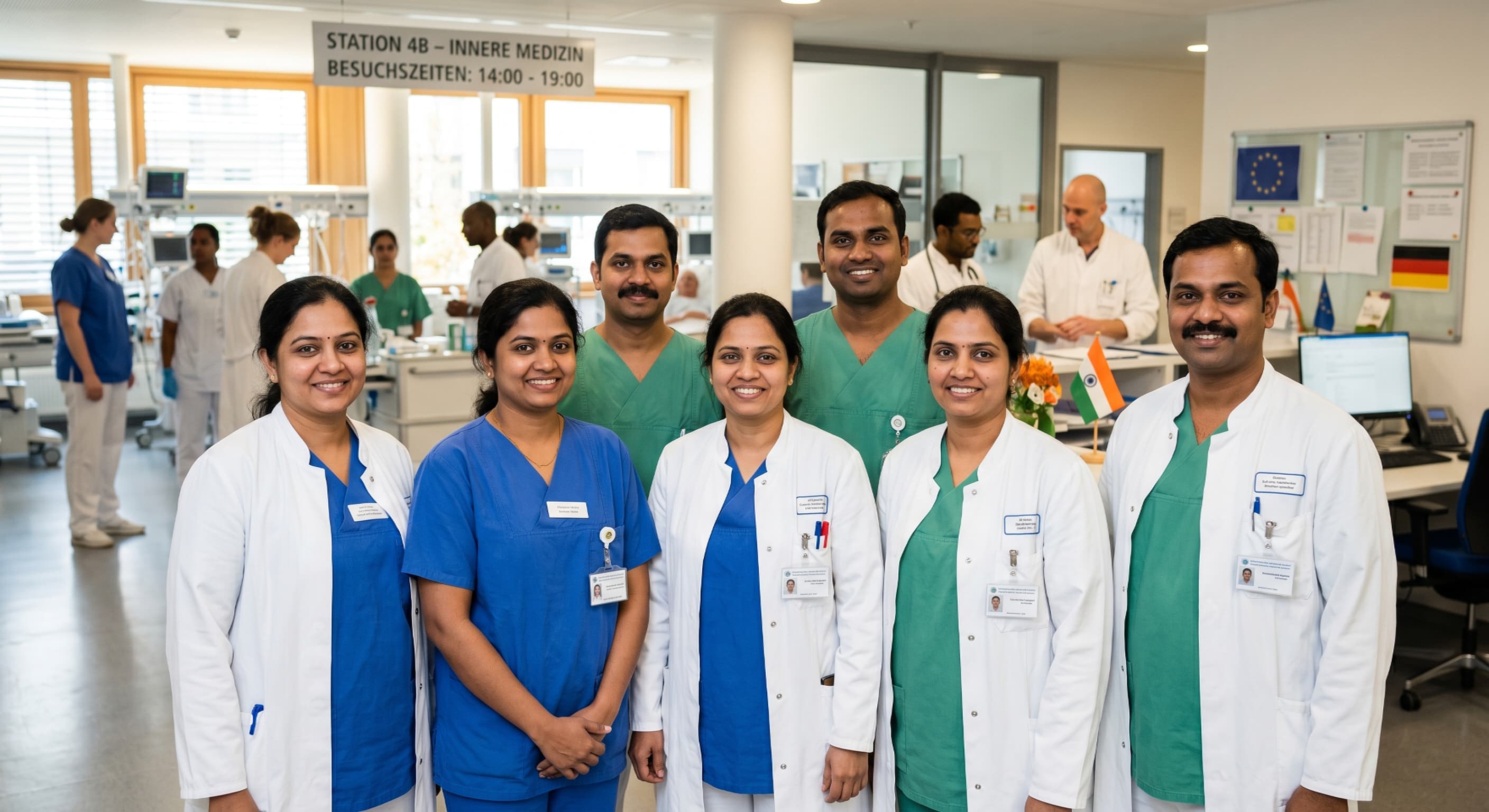
So here it is. Approximately 16,600 Indian nurses were employed across German healthcare institutions as of June 2025. That number didn't happen by accident. It happened because for most of those nurses, the answer to "is it worth it?" turned out to be yes — but with conditions. Taldo has helped 30+ nurses reach that answer through its direct placement program, and the team has seen what separates the ones who thrive from the ones who struggle.
Here's the honest version.
What You Actually Gain
Start with the numbers because they matter. Registered nurses in Germany take home approximately €2,000–€2,400 net per month after income tax and social contributions. At current exchange rates, that's roughly ₹1.8–₹2.1 lakh every month — reliably, into your bank account.
| Factor | India | Germany |
|---|---|---|
| Average net monthly salary | ₹18,000–₹35,000 | €2,000–€2,400 (≈₹1.8–₹2.1 lakh) |
| Standard work week | 48–60 hours (often more) | 37.5 hours |
| Annual paid leave | 12–15 days | 28–30 days |
| Overtime | Rarely compensated | Paid and legally regulated |
| Job security | High attrition, low leverage | Shortage market — you have leverage |
| Path to PR | Not applicable | 5 years legal residence |
The salary gap is real. But the work-life difference is what most nurses say surprised them most. A 37.5-hour week with 28–30 days of paid leave is a different life — not just a different payslip.
Q: How much can I realistically send home to India each month? A: In most mid-sized German cities where hospital placements happen, a nurse can live comfortably on €1,000–€1,400/month including rent, food, and transport. On a €2,000–€2,400 net salary, that leaves €600–€1,400 available for savings or remittances — roughly ₹54,000–₹1,26,000/month. After qualification, nurses in specialist roles (ICU, OT) earning €2,500–€3,000 net can remit significantly more. Use the Taldo Germany Salary Calculator for a personalised breakdown.
What Nobody Tells You (The Hard Parts)
This is the section most agencies skip. Taldo doesn't — because nurses who arrive prepared handle the hard parts. Nurses who arrive with only the highlights reel struggle.
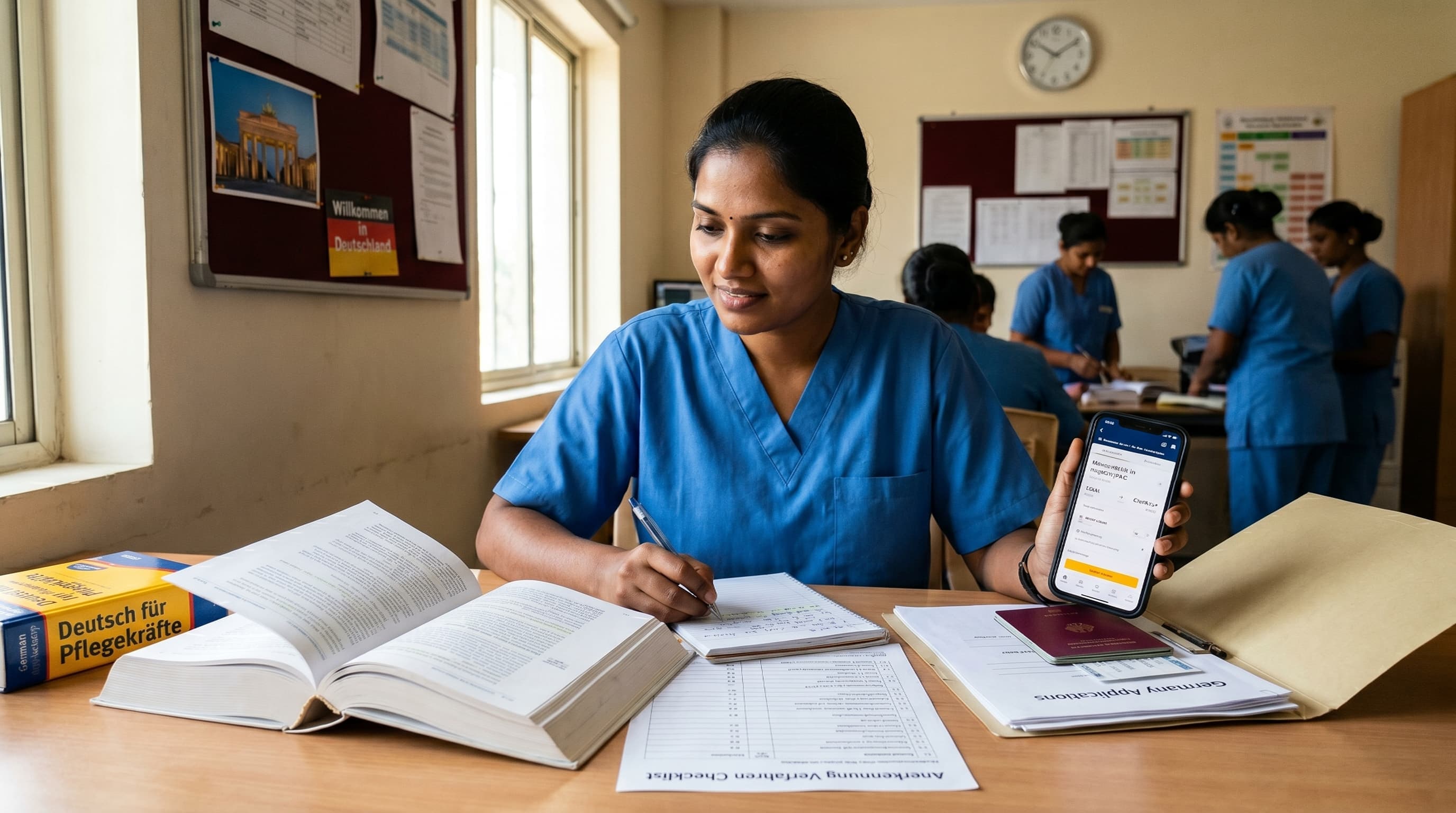
Language is harder than the certificate suggests. Passing B2 is achievable. Functioning confidently on a German ward — patient handovers, emergency communication, documentation — takes longer. The gap between exam German and clinical German is real. Healthcare professionals who invest in medical-specific language training adapt fast. Those who treat B2 as a checkbox hit a wall in month one.
The first three months are genuinely difficult. New country, new system, unfamiliar food, colleagues who speak fast, family five time zones away. Most nurses say month three is the turning point. Before that, it's hard. This isn't a reason not to go — it's a reason to go in with eyes open and a proper support structure.
The process takes 12–15 months. Not 6. Not "a few months." From A1 German to your first shift is a 12–14 month commitment. Anyone telling you otherwise is either misleading you or skipping steps. Taldo's end-to-end program runs this timeline accurately and builds it into the plan from day one.
Partial recognition is common and not a dealbreaker. Many Indian nurses — particularly GNM holders — receive partial recognition (Teilanerkennung) rather than full recognition. This means completing an adaptation measure before full registration, usually 3–6 months of supervised clinical practice. The key fact most people miss: you're employed and earning during this period.
Q: What if I go through all of this and don't like it in Germany? A: It's a legitimate question. German work permits don't lock you in — after your initial contract period you're free to change employers, move to a different city, or return to India. Permanent Residency is available after 5 years but is not mandatory. Most nurses who leave Germany do so by choice, not because the system failed them. The ones who struggle most are those who arrived unprepared for the language barrier or underestimated the adjustment period.
The Honest Verdict: Who Should Go and Who Should Wait
Not every nurse is ready for this move right now — and that's fine. Here's a straight answer:
Germany is likely worth it if:
- ✦You're earning under ₹40,000/month in India with limited growth visibility
- ✦You're willing to commit 6–9 months seriously to B2 German before anything else
- ✦You have stable family support during the transition period
- ✦You want job security, structured hours, and a clear path to permanent residency
Germany may not be right yet if:
- ✦You're not prepared to invest real time in language training — not apps, actual speaking practice
- ✦You have major family obligations in India that can't be managed with a remote income
- ✦You're expecting the process to take less than a year
- ✦You're hoping to "figure it out" after arriving — the process requires decisions before you leave
The shortage is real, the salaries are real, and the path is proven. But it rewards preparation and penalises shortcuts.
Calculate Your Net Income and Savings
The salary looks different for everyone depending on your state of employment, tax class, specialist role, and shift patterns. Use the Taldo Germany Salary Calculator to get a personalised monthly breakdown — including realistic savings and remittance projections based on your actual situation.
Ready to Take the First Step?
If you're still deciding, the most useful thing you can do is have one honest conversation with someone who has run this process hundreds of times. Chat with a Taldo Senior Career Counsellor for free — no commitment, no pitch. Or join a free Taldo webinar to hear directly from nurses who've already made the move and ask them the questions you actually want answered.
Key Facts & Statistics
- ✦Approximately 16,600 Indian nurses were employed across German healthcare institutions as of June 2025. [Source: Y-Axis, 2025]
- ✦Germany faces an active shortage of 30,000–40,000 nursing professionals. [Source: German Federal Employment Agency, 2026]
- ✦Registered nurses in Germany take home approximately €2,000–€2,400 net per month. [Source: Terratern, 2026]
- ✦The gross annual salary for a registered nurse in Germany is approximately €35,000. [Source: kochiva.com, 2026]
- ✦Full recognition (Anerkennung) increases employment probability by 17 percentage points within one year. [Source: TalentOrbit, 2024]
Q: Is Germany better than the UK or Canada for Indian nurses in 2026?
Germany's advantage in 2026 is process speed and certainty. Canada's immigration routes for nurses have lengthened to 18–30 months with no guaranteed job on arrival. The UK has tightened visa routes and introduced salary thresholds that affect net pay. Germany's fast-track recognition procedure targets 2 months, the total process runs 12–15 months, and Taldo secures a job offer before you board the flight. Chat with a Taldo counsellor for a country-by-country comparison based on your qualification.
Q: What happens to my Indian nursing registration if I move to Germany?
Your Indian State or Central Nursing Council registration remains valid — you don't lose it by working abroad. You'll need it as part of your German Anerkennung (recognition) application. Many nurses keep their Indian registration current even while working in Germany, as it's required documentation if you ever choose to return or apply elsewhere. Chat with a Taldo counsellor for personalised guidance.
Q: Can a married nurse with children realistically move to Germany?
Yes — and many do. Family reunification is available once you have stable employment in Germany. Spouses and dependent children under 18 can join you. Most nurses spend the first 6–12 months settling in, then initiate the family reunification process once they're financially stable. Schools in Germany are free, and dependent family members are covered under the statutory health insurance system. Chat with a Taldo counsellor for personalised guidance.
Q: What GNM or B.Sc Nursing — does it matter which qualification I have?
Both are accepted in Germany. B.Sc Nursing holders more commonly receive full recognition (Vollständige Anerkennung) directly. GNM holders more often receive partial recognition (Teilanerkennung), which requires an adaptation measure before full registration — usually 3–6 months of supervised clinical practice, during which you're employed and earning. Neither qualification blocks your path. Taldo runs a credential pre-assessment early in onboarding so you know exactly what to expect before committing. Chat with a Taldo counsellor for personalised guidance.
Is nursing in Germany worth it for Indian nurses in 2026? For most — yes. The salary gap is real, the shortage works in your favour, and the path is structured enough to be predictable. But it rewards the nurses who go in prepared and penalises the ones chasing a shortcut. The team at Taldo is built for the prepared ones — from your first German class to your first payslip in Germany.