GNM Nurse to Germany 2026: Honest Eligibility Guide (With Partial Recognition Explained)
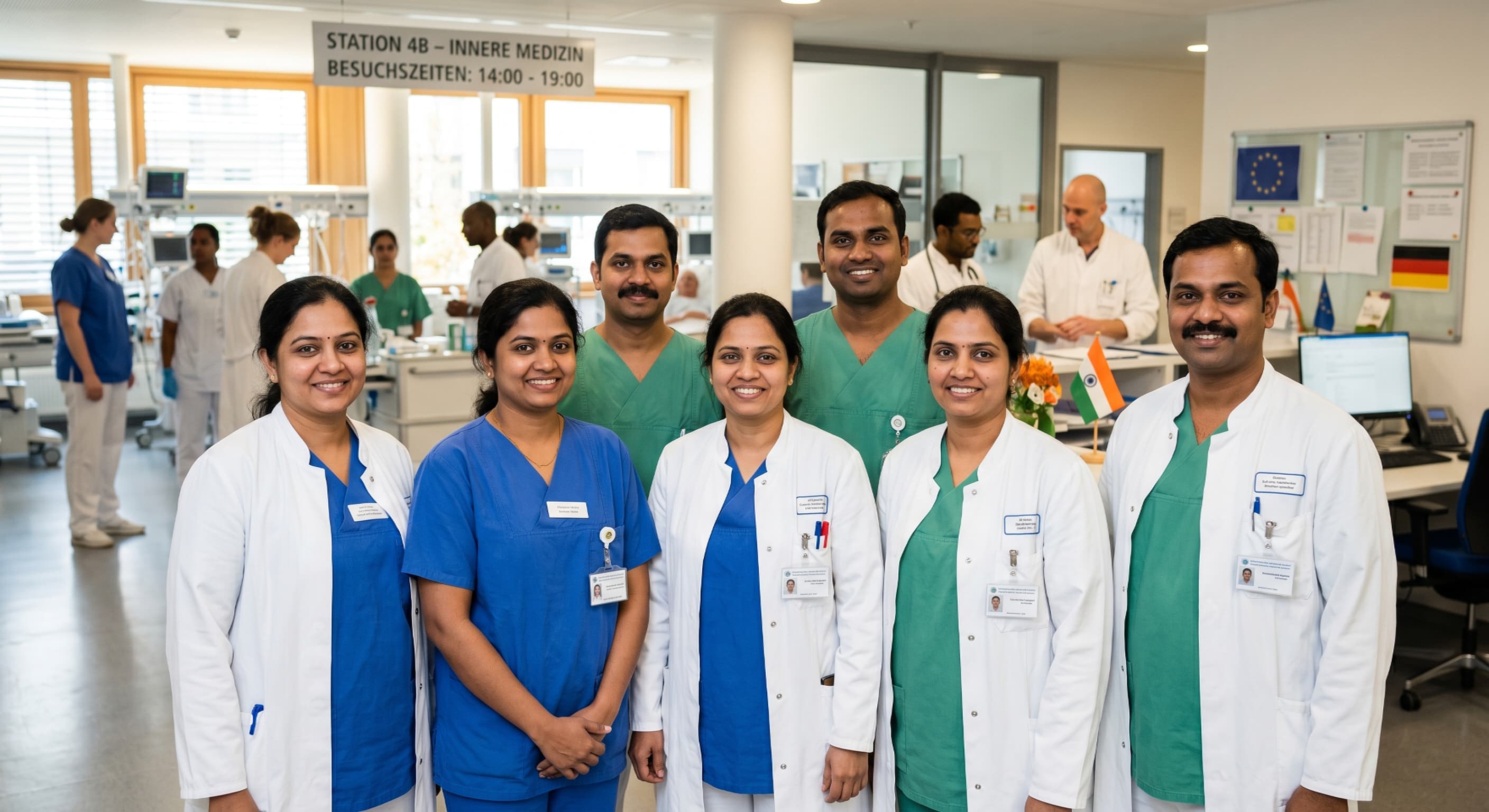
Fast Facts: Life in Germany
38-40
Hrs / Week Work
5 Years
To Permanent Residency
"You trained for three years, worked tough shifts, and built real clinical skills. Germany's nursing shortage is severe — over 200,000 positions are unfilled — and they are actively recruiting internationally. The question is not whether GNM nurses are needed. The question is whether you understand exactly what the recognition process involves before you commit.
Quick Answer
India's GNM programme is a three-year diploma and one of the most widely held nursing qualifications in the country. But when assessed against German nursing standards, GNM typically falls short in total clinical training hours. This does not make you ineligible. It means Germany will ask you to close that gap before issuing a full licence.
Understanding this upfront saves you from the frustration that many GNM nurses experience when they expect the same pathway as a BSc nurse and encounter a different one.
What Does "Partial Recognition" Actually Mean for GNM Nurses?
Partial recognition, called Teilanerkennung in German, is the formal outcome when the recognition authority determines that your qualification meets some but not all requirements of the German nursing standard.
For GNM nurses, this is the expected outcome. It is not a rejection and not a dead end. It is a starting point.
Once you receive a partial recognition decision, you have two paths to full licensure:
Anpassungslehrgang (Adaptation Course): A supervised, paid placement in a German hospital lasting 3 to 6 months. You work under the guidance of a qualified German nurse while completing the theoretical and clinical modules identified as gaps in your recognition decision. This is the route most GNM nurses take, and importantly, you are paid during the course, typically €1,400 to €1,800 per month.
Kenntnisprüfung (Knowledge Examination): An alternative to the adaptation course, this is a written and practical exam covering the gap areas. Some nurses prefer this if they have significant post-GNM clinical experience and are confident in the flagged areas. It is faster if you pass, but carries more risk.
Most candidates who come through Taldo choose the Anpassungslehrgang because it gives you time to adjust to the German healthcare environment, build your language confidence in a clinical setting, and earn a salary while you do it.
| Qualification | Recognition Type | Bridging Required | Timeline to Full Licence |
|---|---|---|---|
| GNM (3-year diploma) | Partial | Yes, Anpassungslehrgang or exam | 12 to 18 months |
| BSc Nursing (4-year) | Full | Rarely | 6 to 12 months |
| Post-Basic BSc | Full | Rarely | 6 to 12 months |
What the Recognition Process Looks Like Step by Step
The Anerkennung (recognition) process is handled by the competent authority of the German state where you intend to work. Each state has its own authority and processing times vary. Here is what the process looks like in practice:
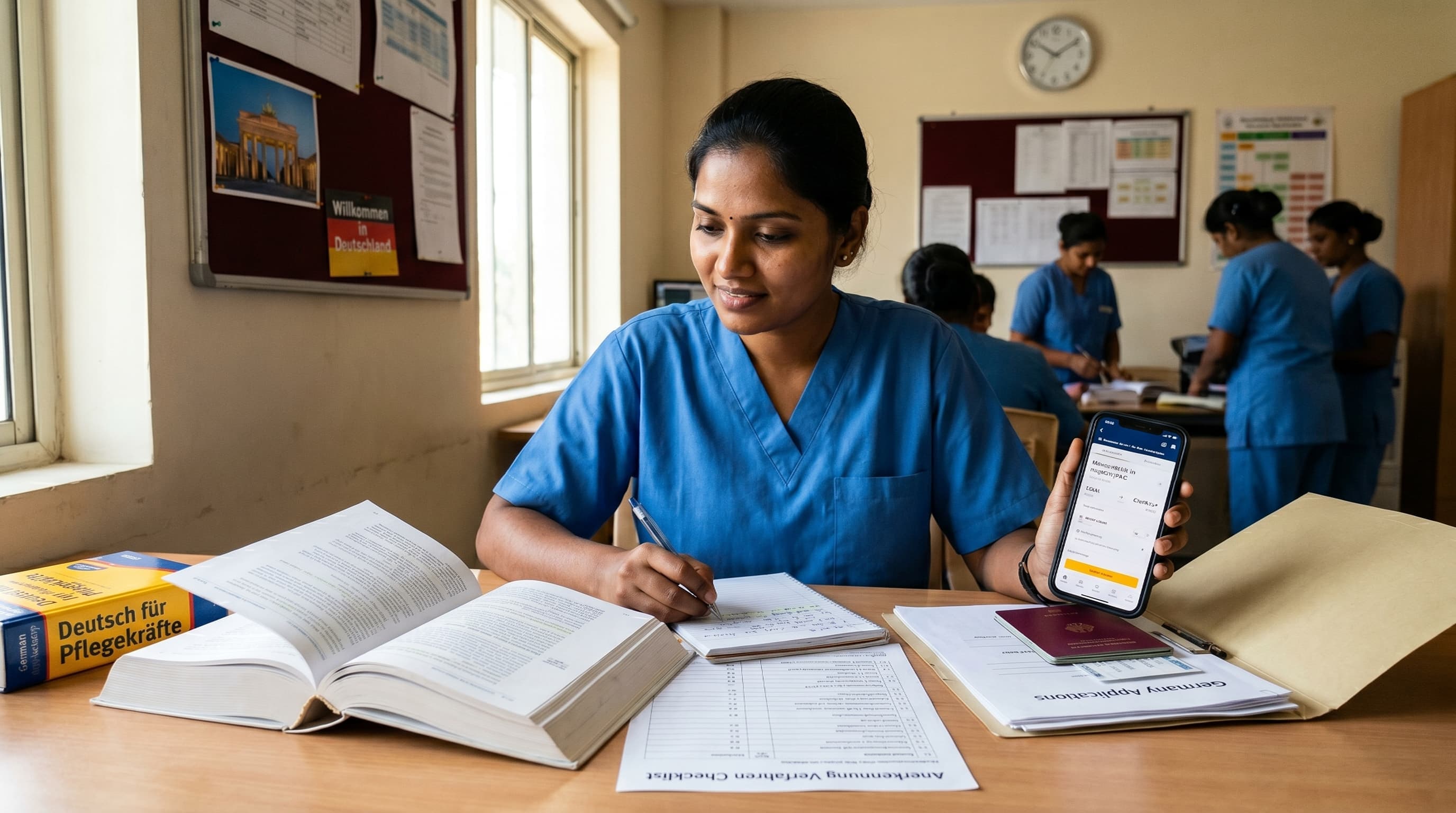
1. Document preparation. You gather your GNM certificate, mark sheets, nursing council registration, and a detailed curriculum from your nursing school. These must be translated into German by a certified translator.
2. Application submission. Your application goes to the recognition authority. Many states now offer a 60-day fast-track review for internationally qualified nurses, though complex cases can still take longer.
3. Recognition decision. The authority issues a formal decision. In most GNM cases, this is a partial recognition notice that identifies exactly which theoretical modules or clinical hours must be completed.
4. Hospital placement. You are matched with a German hospital partner for the Anpassungslehrgang. You arrive in Germany on a recognition visa and begin the paid placement.
5. Full licence. Once you complete the bridging course and your hospital confirms successful completion, the authority issues your full nursing licence (Approbation or Berufserlaubnis). From this point you are a fully recognised nurse in Germany.
For a deeper breakdown of what to do if your specific documents are flagged, read our full guide to the Anerkennung process for Indian nurses.
Language: What B2 Means in Practice
German language proficiency at B2 is mandatory before you can begin the recognition application or enter Germany for the Anpassungslehrgang. This is a federal requirement, not a recommendation.
B2 means you can understand and discuss complex topics in a clinical context: reading a patient chart, communicating with a doctor about medication changes, explaining a procedure to a patient. It is a meaningful level of fluency, and it typically takes 12 to 18 months of dedicated study starting from zero.
Nurses who start German early, from A1 while still in India, are significantly better positioned. Those who wait until after the recognition decision is issued often find themselves delaying their start by 6 months or more. For a structured roadmap from A1 to B2, see our German language guide for healthcare professionals.
What You Earn During and After the Process
During the Anpassungslehrgang you receive a training stipend from the hospital, typically €1,400 to €1,800 per month. This covers living costs in most German cities and means you are not spending savings while completing the bridging course.
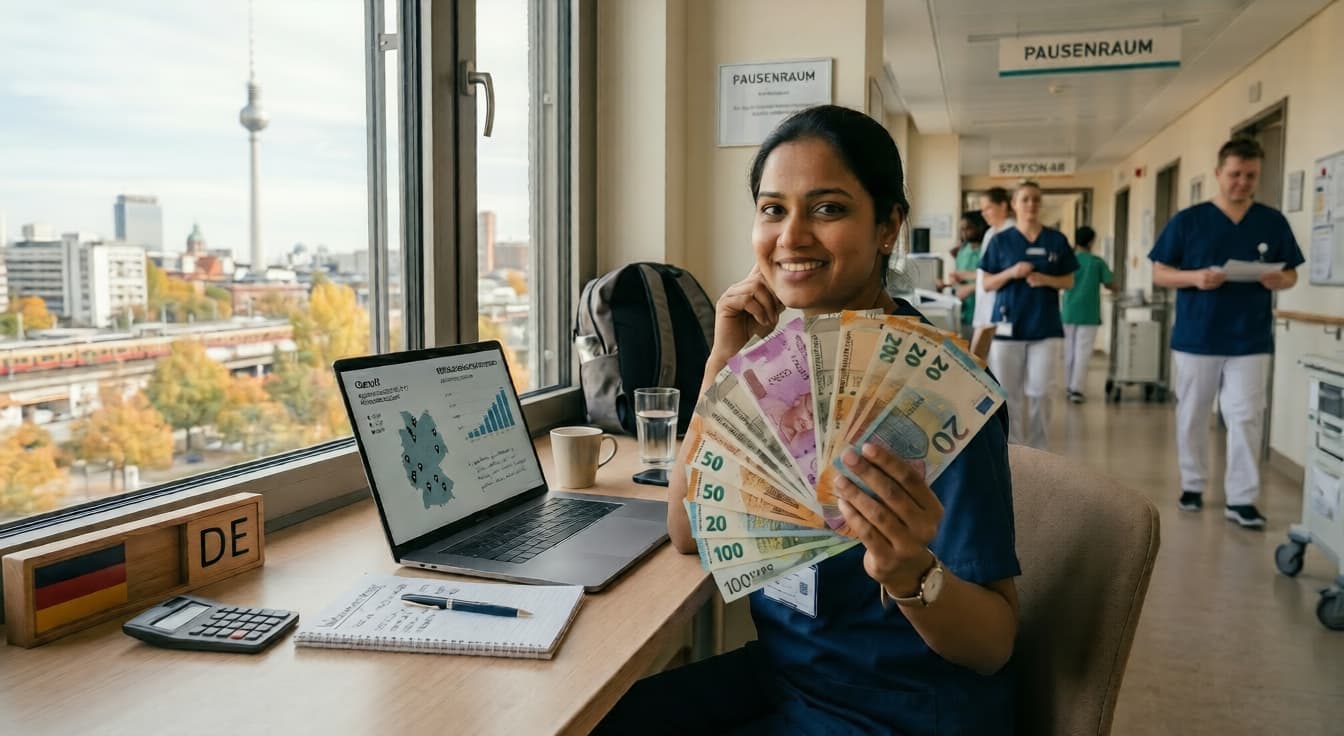
Once fully recognised, registered nurses in Germany earn €2,800 to €3,800 gross per month depending on location, employer, and seniority. After German taxes and social contributions, the net take-home is typically €1,700 to €1,900 per month. At today's exchange rates, that is ₹1,53,000 to ₹1,71,000 every month. Use the Taldo salary calculator to see your specific net figure.
Q: Is partial recognition a permanent mark on my record, or does it go away after the bridging course?
Once you complete the Anpassungslehrgang and the recognition authority issues your full licence, the partial recognition is superseded. You are fully recognised with no distinction from a BSc nurse who received full recognition directly. Partial recognition is a step in the process, not a permanent classification.Q: What if I have 10 or more years of experience as a GNM nurse — does that count toward recognition?
Work experience is considered during the recognition assessment and can reduce the length of your Anpassungslehrgang. However, it does not replace the formal requirement. The authority will factor in your experience when determining the gap, which may shorten your bridging course from 6 months to 3 months in some cases.Q: Can I bring my family to Germany during the bridging course?
Family reunification is possible once you have stable employment and adequate housing, but most nurses begin this process after completing the Anpassungslehrgang and starting their full contract. The typical timeline is 12 to 18 months after arriving in Germany. After 5 years of legal residence you become eligible for Permanent Residency. Chat with a Taldo counsellor for guidance specific to your situation.Ready to understand exactly where your GNM qualification stands? Chat with a Taldo Senior Career Counsellor on WhatsApp — it is free, and they can give you an honest assessment based on your specific qualification and experience level.