Can Indian Physiotherapy Freshers Get Jobs in Germany? Eligibility, Experience and Preparation
Fast Facts: Life in Germany
30 Days
Paid Annual Leave
14 Mo
Paid Parental Leave
"If you have just finished your BPT and internship, you have probably wondered whether Germany is only for physiotherapists with years of experience. The short answer is no. Freshers can and do get placed, but the route rewards early preparation more than almost any other factor.
Many Indian graduates assume they must work for two or three years in India before applying abroad. In practice, German recognition is based mainly on your education and training, not on how long you have worked. That is good news for freshers, but it comes with conditions: your German, your documents and your realistic expectations all matter more when you do not yet have a work history to lean on.
This guide explains what freshers need, where experience helps and where it does not, and how to use your first months after graduation well. If you want the complete process in order, our step-by-step guide for Indian physiotherapists to work in Germany is a good starting reference.
The Short Answer
Yes, Indian physiotherapy freshers can get jobs in Germany. The usual requirements are the same for freshers and experienced applicants:
- ✦A completed BPT, typically four years of study plus a six-month internship
- ✦Professional recognition (Anerkennung) of your qualification by the relevant German state authority
- ✦German language skills, generally B2 for clinical practice
- ✦A job offer and a national work visa
Once your qualification is recognised, a physiotherapist in Germany typically earns around €3,400–€3,600 gross per month, which is roughly €2,300–€2,600 net. Experience may influence the offers you receive and how quickly you progress, but recognition itself does not require a minimum number of working years.
Freshers vs Experienced Physiotherapists: What Actually Differs
| Factor | Fresher (BPT + internship) | Experienced (2–5+ years) |
|---|---|---|
| Recognition eligibility | Based on your degree and training | Same, with work experience as supporting evidence |
| Language requirement | B2 for clinical practice | B2 for clinical practice |
| Documents | Degree, transcripts, internship record, syllabus | Same, plus experience letters |
| Interview expectations | Basic clinical reasoning, motivation, learning attitude | Specialised skills, case examples |
| Negotiating position | Standard offers | May negotiate on role or responsibility |
| Typical advantage | Recent training, flexibility, longer career runway | Practical depth, confidence with patients |
The biggest difference is not eligibility but evidence. An experienced applicant can show years of practice. A fresher has to show strong foundations, a clean paper trail and a clear plan.
How Recognition Works for Freshers
Recognition is where most of the process is decided. The authority compares your BPT with the German three-year physiotherapy training, looking at subjects, hours and practical training. Freshers have one real advantage here: your syllabus, internship records and transcripts are recent, easy to obtain and well documented. Our guide to what determines whether your BPT is recognised in Germany explains what the authority looks at, and the points apply equally to freshers and experienced applicants.
It also helps to understand the document side of recognition early. Our walkthrough of Anerkennung for Indian physiotherapy graduates covers what the authority expects to see, so you can request transcripts and internship certificates while your university still has your records fresh.
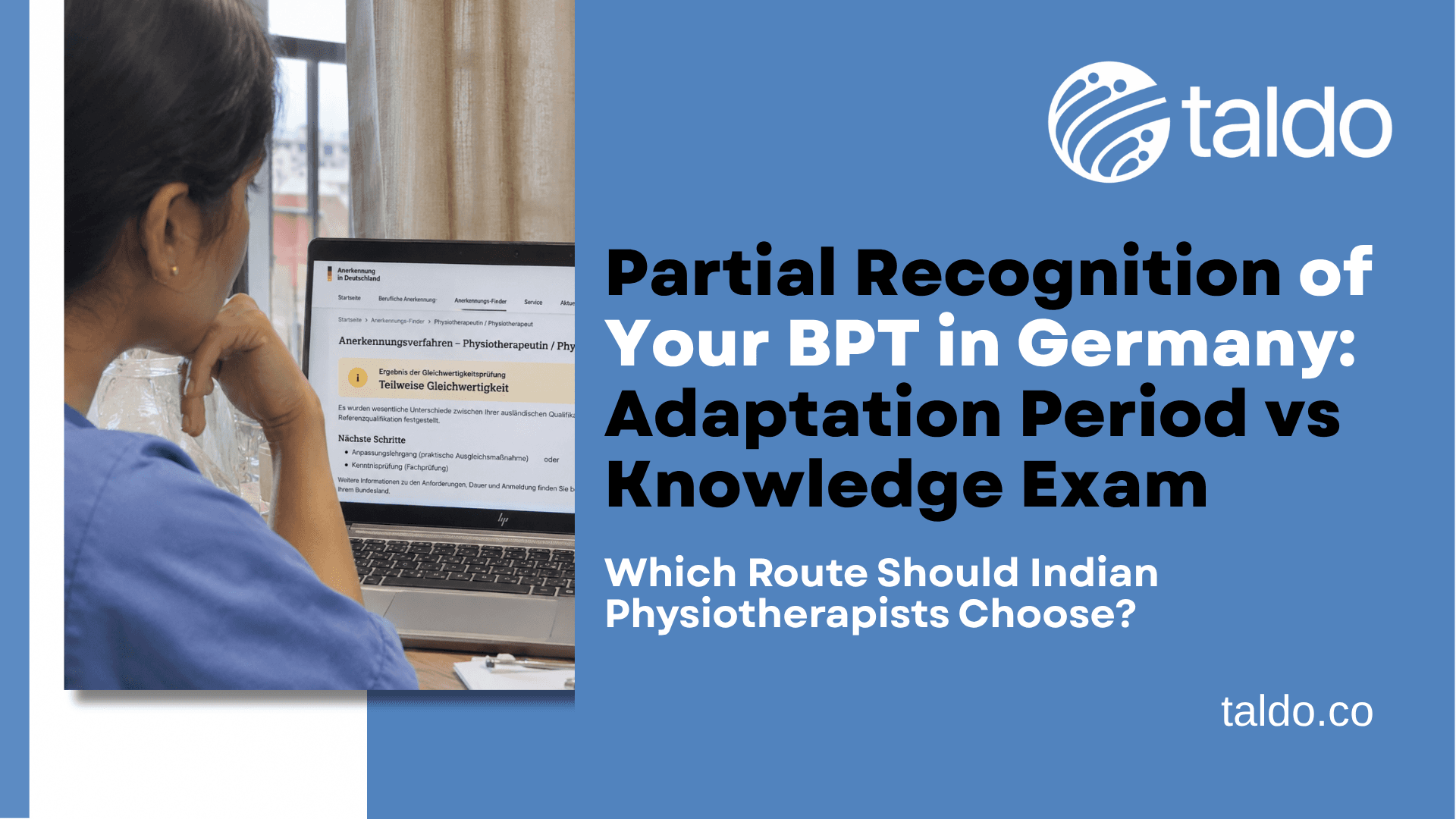
Partial recognition is possible for freshers too. Differences in training structure between India and Germany can lead to a partial decision regardless of your experience. If that happens, you complete either an adaptation period or a knowledge exam. We compared the two routes in our guide to partial recognition of the BPT in Germany. Freshers sometimes find the knowledge exam more manageable, since their theory is recent, but the right choice depends on your gaps and your German.
Does Work Experience Help?
Experience can help in three ways, but none of them is a gate you must pass.
- ✦Supporting your recognition file. Experience letters on letterhead, with dates, duties and working hours, can strengthen your application. How much weight an authority gives them varies.
- ✦Interviews. Concrete case examples make you more convincing. Freshers can use internship cases, clinical postings and any research or project work.
- ✦Specialisation. Roles in areas such as neurological or sports rehabilitation often prefer some clinical depth. Freshers usually start in more general settings and specialise later.
If you are deciding between working in India first or applying straight away, think about what you need most. If your German is not yet ready, the time you spend working in India can run alongside your language study. If your German is progressing well, there is no reason to delay the recognition application.
Language: The Real Gatekeeper for Freshers
For freshers, language is the single most important lever. Employers know you are early in your career, so they look hard at whether you can communicate with patients and colleagues from day one. Reaching B2 from zero typically takes around 8 to 14 months, depending on study hours and exam availability.
You can start the process before you finish B2, but your paperwork and job search will move faster as your level rises. Our breakdown of German B1 versus B2 for Indian physiotherapists explains what each level means in practice and how it fits recognition and visa requirements.
A practical tip: begin German during your internship year. Even three to four hours a week adds up, and it spares you a long gap between graduation and your first language exam.
Where Freshers Usually Start Working
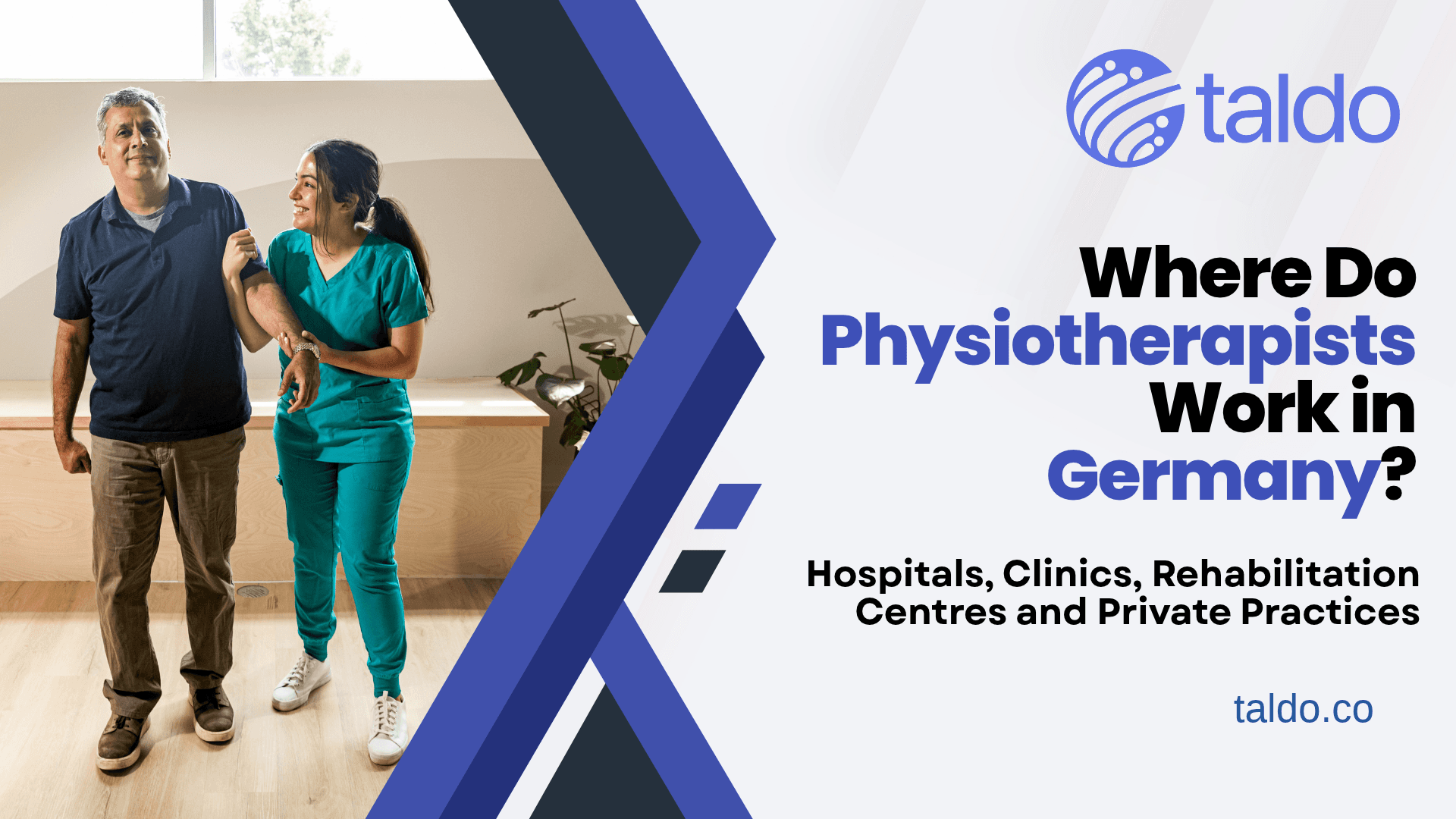
Freshers are hired across several types of workplaces. Rehabilitation centres and outpatient practices are common first roles because their routines are structured and the clinical goals are clear. Hospitals offer broader exposure but expect stronger clinical German. We compared the main options in our guide on where physiotherapists work in Germany, which is useful when deciding which type of employer to target first.
An employer who has hosted international physiotherapists before is especially valuable for freshers. They are more likely to understand the recognition process, support an adaptation period if you need one, and give you structured early supervision.
What to Expect on Pay
After recognition, the pay band is the same for freshers as for others in similar roles, with differences coming mainly from the employer's structure and any allowances. During an adaptation period, your role and pay may differ from those of a fully recognised physiotherapist, so confirm the terms in writing. For a full picture of take-home pay and living costs, see our comparison of physiotherapist salary in Germany versus India.
For freshers in India, where early-career salaries are modest, the gap is often most striking. If you are weighing other destinations, our guide comparing Germany and the Gulf for Indian physiotherapists looks at salary, visa and long-term options side by side.
A Preparation Plan for Freshers
Use the months after graduation deliberately. A sensible sequence looks like this:
| Timeframe | Focus | Key actions |
|---|---|---|
| Months 1–3 | Foundations | Start German (A1), request transcripts and internship certificates, confirm your target state |
| Months 4–8 | Language and documents | Progress to A2 and B1, get certified copies and translations, keep names and dates consistent |
| Months 9–12 | Recognition and job search | Submit your recognition application, build your CV in German format, speak to employers |
| Months 12–18 | B2 and offer | Sit your B2 exam, prepare for interviews, finalise your contract |
| Months 15–24 | Visa and move | Apply for your national visa, arrange accommodation and travel |
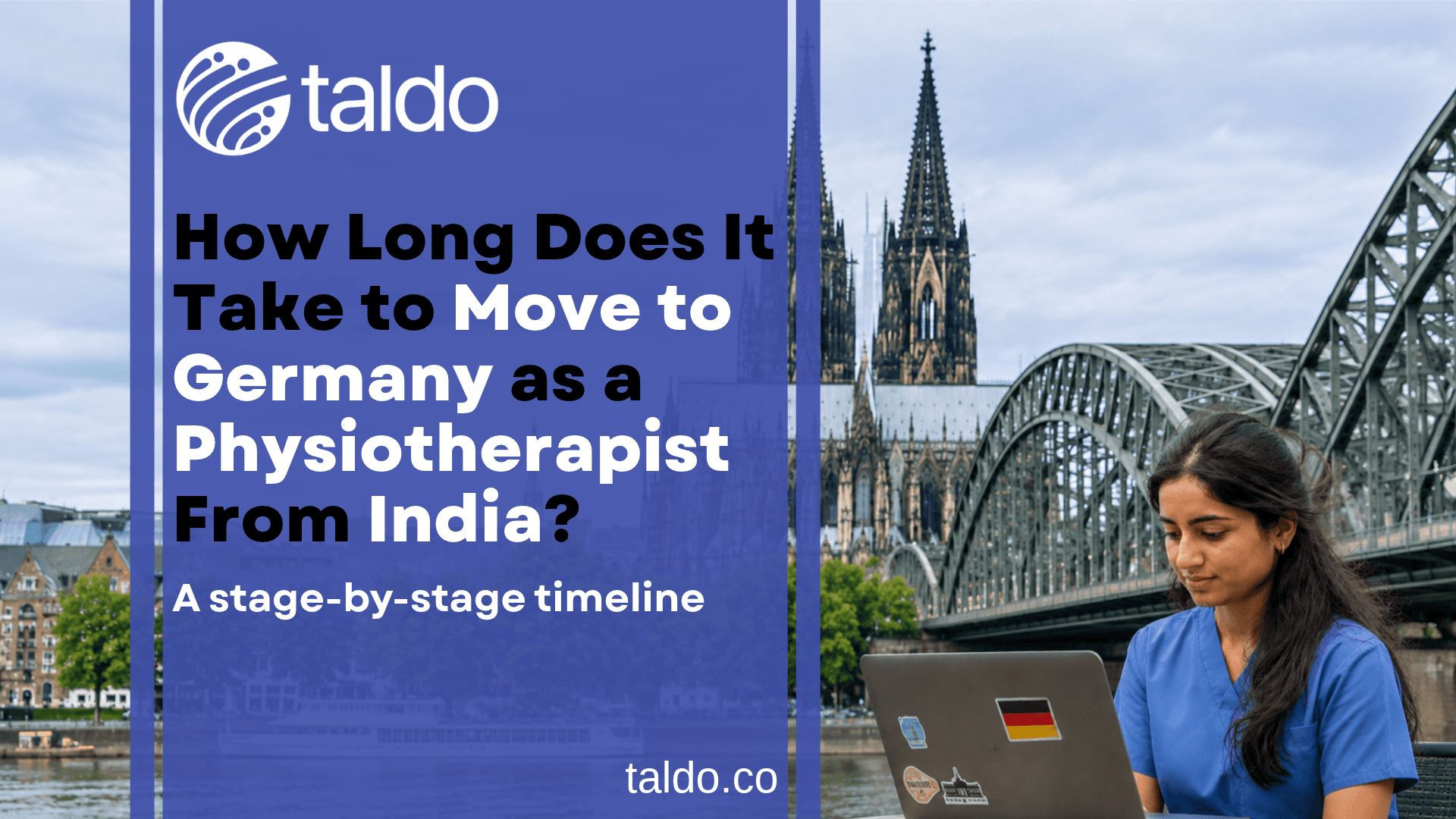
These are indicative ranges. Our timeline for moving to Germany as a physiotherapist explains how the stages overlap, and the total journey typically takes 12 to 24 months. Having your paperwork ready early also saves weeks, so keep our checklist of documents required for physiotherapists moving to Germany handy as you collect them.
Common Mistakes Freshers Make
- ✦Waiting for experience before starting. Language and documents can progress while you work or study.
- ✦Starting German late. This is the biggest cause of delay.
- ✦Ignoring syllabus and training hours. These matter more to recognition than most people expect.
- ✦Accepting the first offer without reading the contract. Check hours, pay structure and any support for recognition.
- ✦Underestimating partial recognition. Plan for it as a possibility, not a surprise.
Make a Realistic Plan
Freshers have a real path to Germany, and starting early is the biggest advantage you can give yourself. The work is in the preparation: language, documents and choosing an employer who understands international hiring. Taldo works with German employers and guides Indian physiotherapists through language preparation, recognition and placement. You can message the Taldo team on WhatsApp to talk through your own situation and plan your first steps.
Q: Can a fresh BPT graduate apply for physiotherapy jobs in Germany?
Yes. Recognition is based mainly on your education and training rather than years of work. A fresh graduate with a completed BPT and internship can apply for recognition, learn German to B2 level and look for employers, though preparing early makes a big difference.
Q: Do I need work experience before moving to Germany as a physiotherapist?
No minimum experience is generally required for recognition, but experience letters can support your file and help in interviews. If you have not worked yet, strong internship records, clear documents and good German can carry your application.
Q: Will freshers earn less than experienced physiotherapists in Germany?
After recognition, the typical pay band is around €3,400–€3,600 gross per month, and it applies to newly recognised physiotherapists as well. Differences usually come from the employer, role and allowances, and experience may affect progression over time.